

Amber, everything about this post is incredible. In your reflections on the Danawi study of unintended teen pregnancy and the Badr study of unsafe behavior among young adults during the pandemic, you touch on something particularly critical to discussions about health agency and numerous components of the HBM that often gets left out of the conversation: the power of normalization. As human beings, it doesn’t matter what the evidence says; if ‘everyone else is doing it,’ it must be fine, right? Right?
Excuse the pretentiousness of this but I will now quote Hannah Arendt in The Banality of Evil:
Except for an extraordinary diligence in looking out for his personal advancement, [Eichmann] had no motives at all… He merely, to put the matter colloquially, never realized what he was doing… It was sheer thoughtlessness—something by no means identical with stupidity—that predisposed him to become one of the greatest criminals of that period. And if this is ‘banal’ and even funny, if with the best will in the world one cannot extract any diabolical or demonic profundity from Eichmann, this is still far from calling it commonplace… That such remoteness from reality and such thoughtlessness can wreak more havoc than all the evil instincts taken together which, perhaps, are inherent in man—that was, in fact, the lesson one could learn in Jerusalem.”
— Hannah Arendt, Eichmann in Jerusalem: A Report on the Banality of Evil, 1964
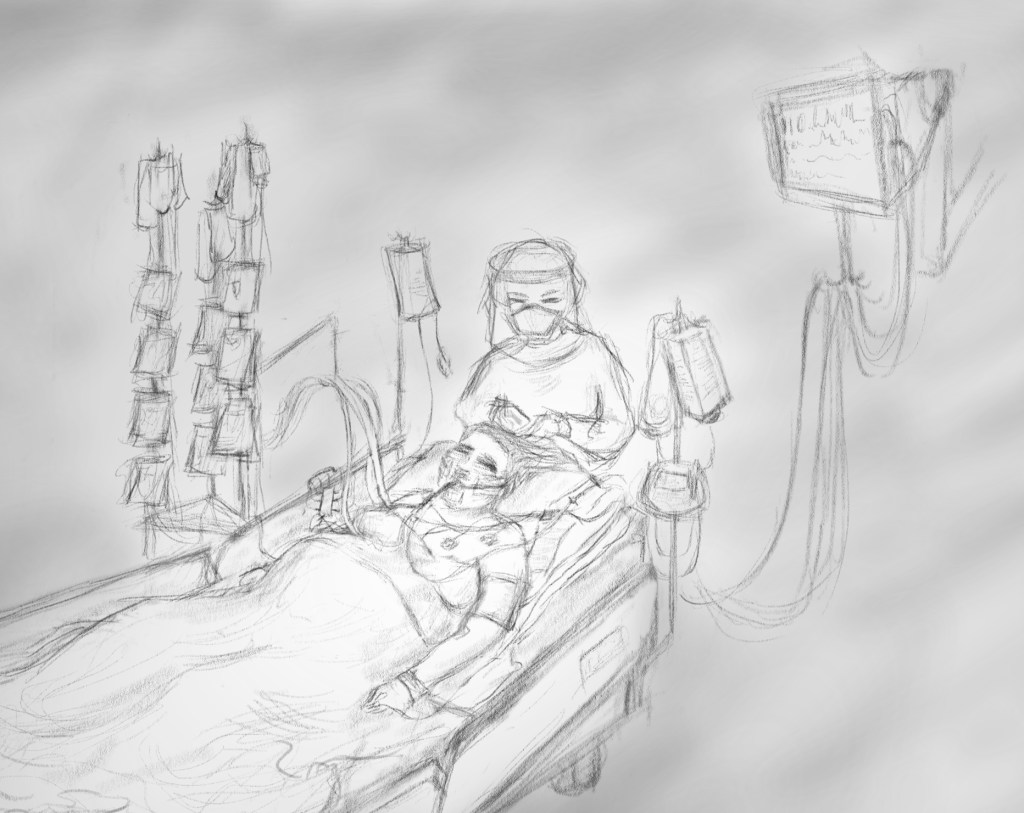
And this is the lesson one could learn in America during the coronavirus pandemic. If a harmful behavior is normalized and a person is remote from the reality of its consequences, then you have a recipe for great evil, and great harm. More than 2,000 Americans are dying everyday right now from a disease we have a vaccine for, a disease that could be stymied by small, simple sacrifices of individuals. One died under my hands only a few days ago – one who was too young, and left young children behind. But we don’t value the common good enough in this country, and we refuse to acknowledge that our individual actions directly affect the safety of others. As Arendt said, it’s so banal it’s almost funny – except that it also makes me despair. What is wrong with this country, this county, this town, that person – I don’t like having thoughts like this. I don’t know how to de-normalize selfishness.
Arendt, H. (1964). Eichmann in Jerusalem: A Report on the Banality of Evil. Rev. and enl. ed. Viking Press.
 the crannied wall